
Properties in Gurugram





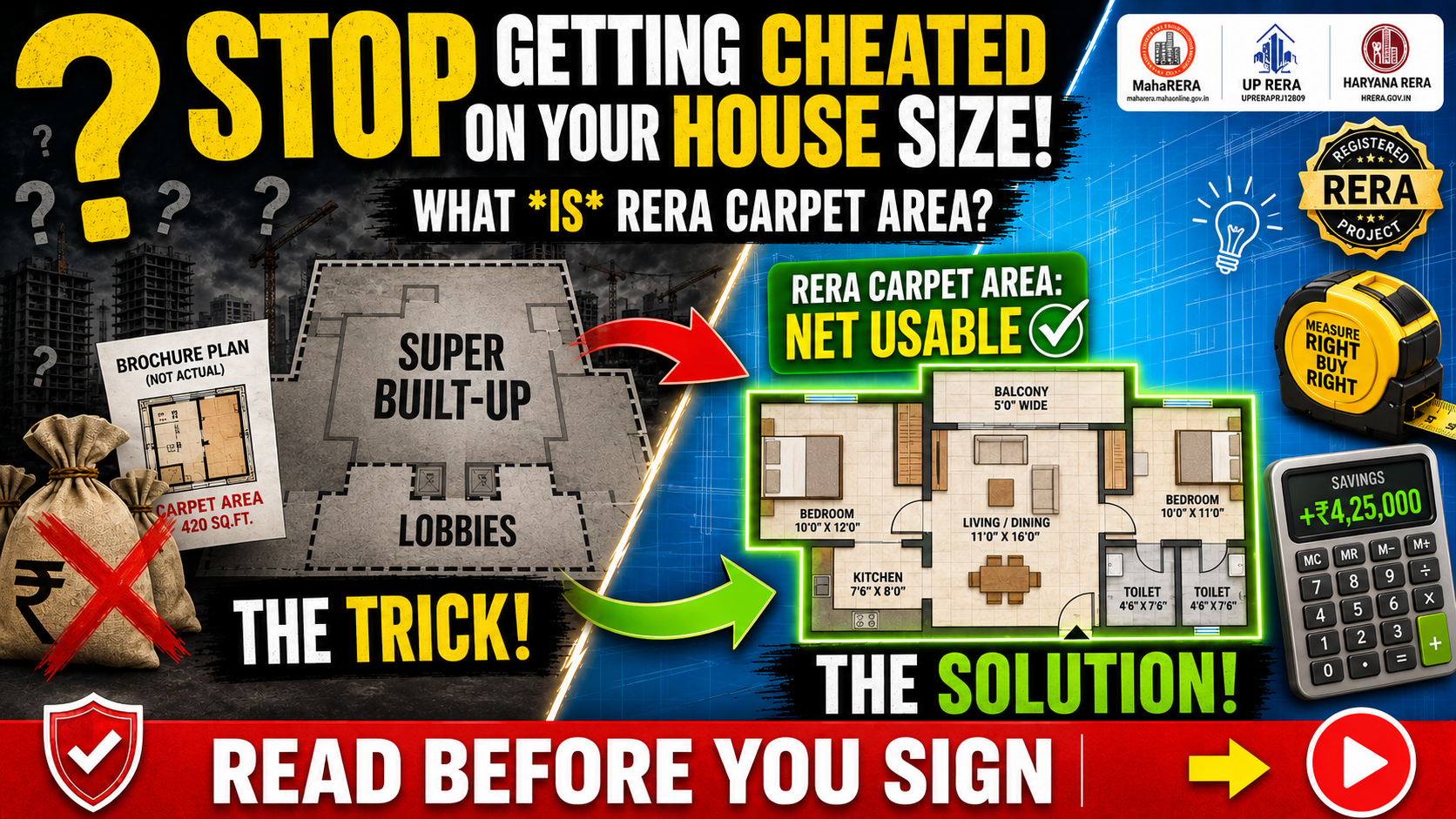
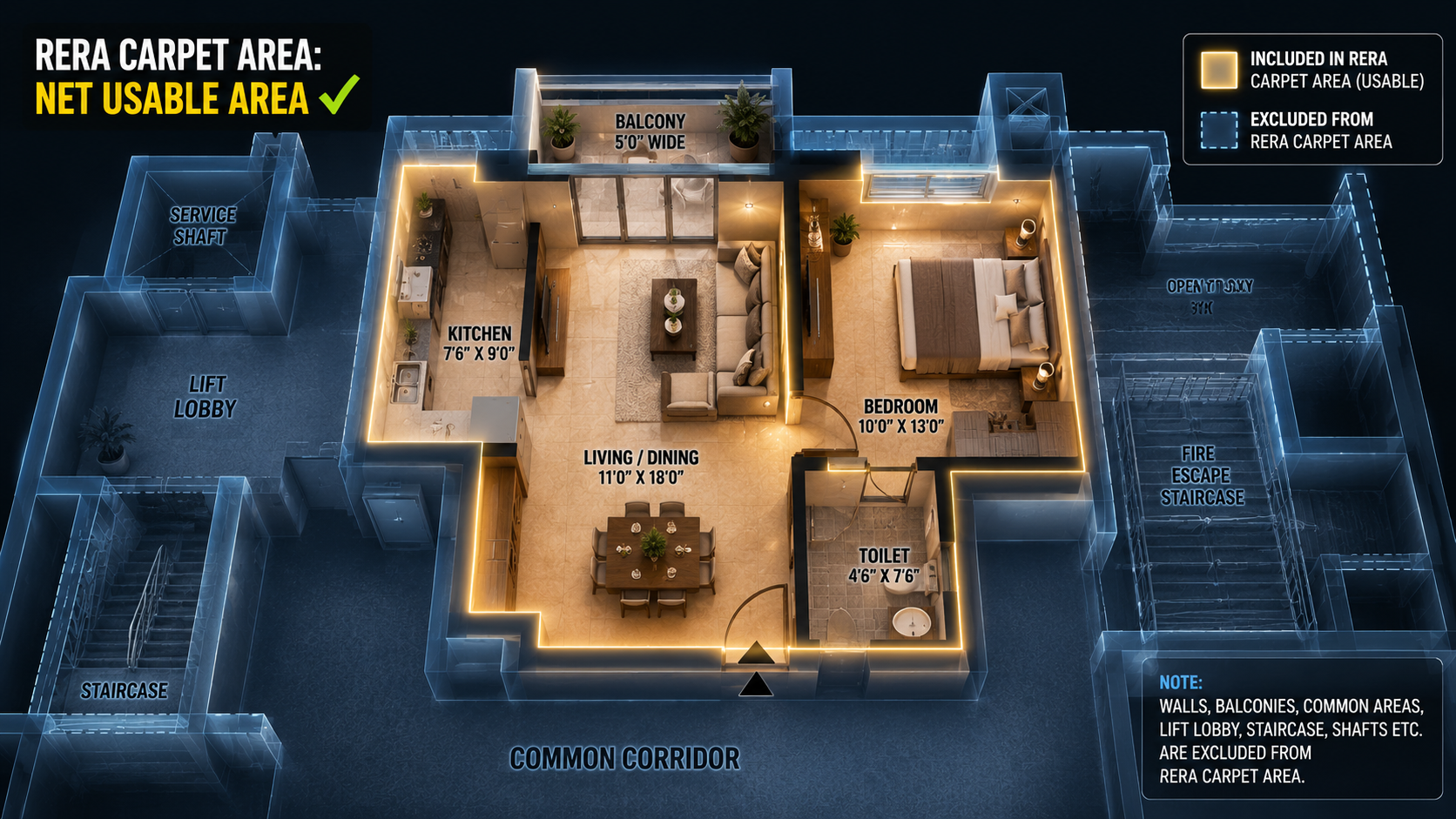
The carpet area in the RERA refers to the net usable area in an apartment. The carpet area specifically includes the thickness of the internal partition walls but does not include external walls, service shafts, or exclusive balconies/terrace areas. Inclusion of such a statutory measurement stops developers from charging buyers excessively for common areas in buildings.
Buying a house is perhaps one of the most significant financial decisions that one takes, but for years, buyers have been paying their life savings for houses without knowing the actual amount of square footage that they are purchasing.
Prior to the introduction of the Real Estate (Regulation and Development) Act (RERA) in 2016, the real estate market in India was characterized by a huge amount of opacity. Builders used to quote exorbitant “super built-up” areas, where the builders charged customers for the sweeping lobbies, elevator shafts, and common staircases.
The statutory RERA carpet area formula brought about an instant shift in the mathematics of real estate. It is through such a law that developers were compelled to come up with a common standard on how to measure and price their properties.
This guide seeks to explain how this spatial measurement formula works, its effects on your wallet, and how to protect yourself from any mistakes by the builder.
What do we mean when we talk about RERA Carpet Area?
In order to ensure that your investment is safeguarded, one must comprehend the precise definition of property measurements. The era of using an estimation from a broker has ended.
What is the official statutory definition of RERA Carpet Area?
As per the section 2(k) of The Real Estate (Regulation and Development) Act, 2016, the RERA carpet area is legally defined as the net area within the walls of the apartment.
This particular computation takes into consideration the areas of interior partition walls. It does not take into consideration the areas of exterior walls, areas of services shafts, balconies, or verandahs, and open terrace areas.
While examining the brochure of a project registered under RERA, the price will have a direct relationship with this particular metric.
How does RERA Carpet Area differ from Usable Carpet Area?
One of the most commonly confused aspects by people is the distinction between the RERA measurement and the usable carpet area. The usable carpet area refers to the precise area that can be carpeted without touching any walls.
RERA measurement includes the boundary of the internal walls including the thickness and this results in a variation of about 5% between the two figures.
Even though 5% may seem like an insignificant number, this loss of area makes all the difference in a densely occupied apartment in an urban setting in terms of layout and placing of furniture.
Use the RERA measurement for legal and price comparison purposes, but the usable carpet area for your living room furniture plan.
What is the loading factor and how does it impact the super built-up area?
Loading Factor is the term that defines the percent value of the common areas that are incorporated into the carpet area to get the Super Built-Up Area. This is a mark-up on the facilities made available by the developers for their residents like entrance halls, gyms, etc.
Calculation of the loading factor will help you get an idea about what you pay for all those areas which exist beyond your door. The calculation is quite easy – the loading factor is equal to the difference between Super Built-Up Area and Carpet Area divided by Carpet Area multiplied by one hundred. The bigger the loading factor (like 40%), the higher the premium you pay for the clubs, etc.
What do we mean when we talk about RERA Carpet Area?
In order to ensure that your investment is safeguarded, one must comprehend the precise definition of property measurements. The era of using an estimation from a broker has ended.
What is the official statutory definition of RERA Carpet Area?
As per the section 2(k) of The Real Estate (Regulation and Development) Act, 2016, the RERA carpet area is legally defined as the net area within the walls of the apartment.
This particular computation takes into consideration the areas of interior partition walls. It does not take into consideration the areas of exterior walls, areas of services shafts, balconies, or verandahs, and open terrace areas.
While examining the brochure of a project registered under RERA, the price will have a direct relationship with this particular metric.
How does RERA Carpet Area differ from Usable Carpet Area?
One of the most commonly confused aspects by people is the distinction between the RERA measurement and the usable carpet area. The usable carpet area refers to the precise area that can be carpeted without touching any walls.
RERA measurement includes the boundary of the internal walls including the thickness and this results in a variation of about 5% between the two figures.
Even though 5% may seem like an insignificant number, this loss of area makes all the difference in a densely occupied apartment in an urban setting in terms of layout and placing of furniture.
Use the RERA measurement for legal and price comparison purposes, but the usable carpet area for your living room furniture plan.
What is the loading factor and how does it impact the super built-up area?
Loading Factor is the term that defines the percent value of the common areas that are incorporated into the carpet area to get the Super Built-Up Area. This is a mark-up on the facilities made available by the developers for their residents like entrance halls, gyms, etc.
Calculation of the loading factor will help you get an idea about what you pay for all those areas which exist beyond your door. The calculation is quite easy – the loading factor is equal to the difference between Super Built-Up Area and Carpet Area divided by Carpet Area multiplied by one hundred. The bigger the loading factor (like 40%), the higher the premium you pay for the clubs, etc.

How does the RERA framework impact your wallet?
The process of standardizing sizes of properties does not involve only improved designs of floor plans. It is much more than that; it involves safeguarding your money.
Why is transparent pricing essential for property buyers?
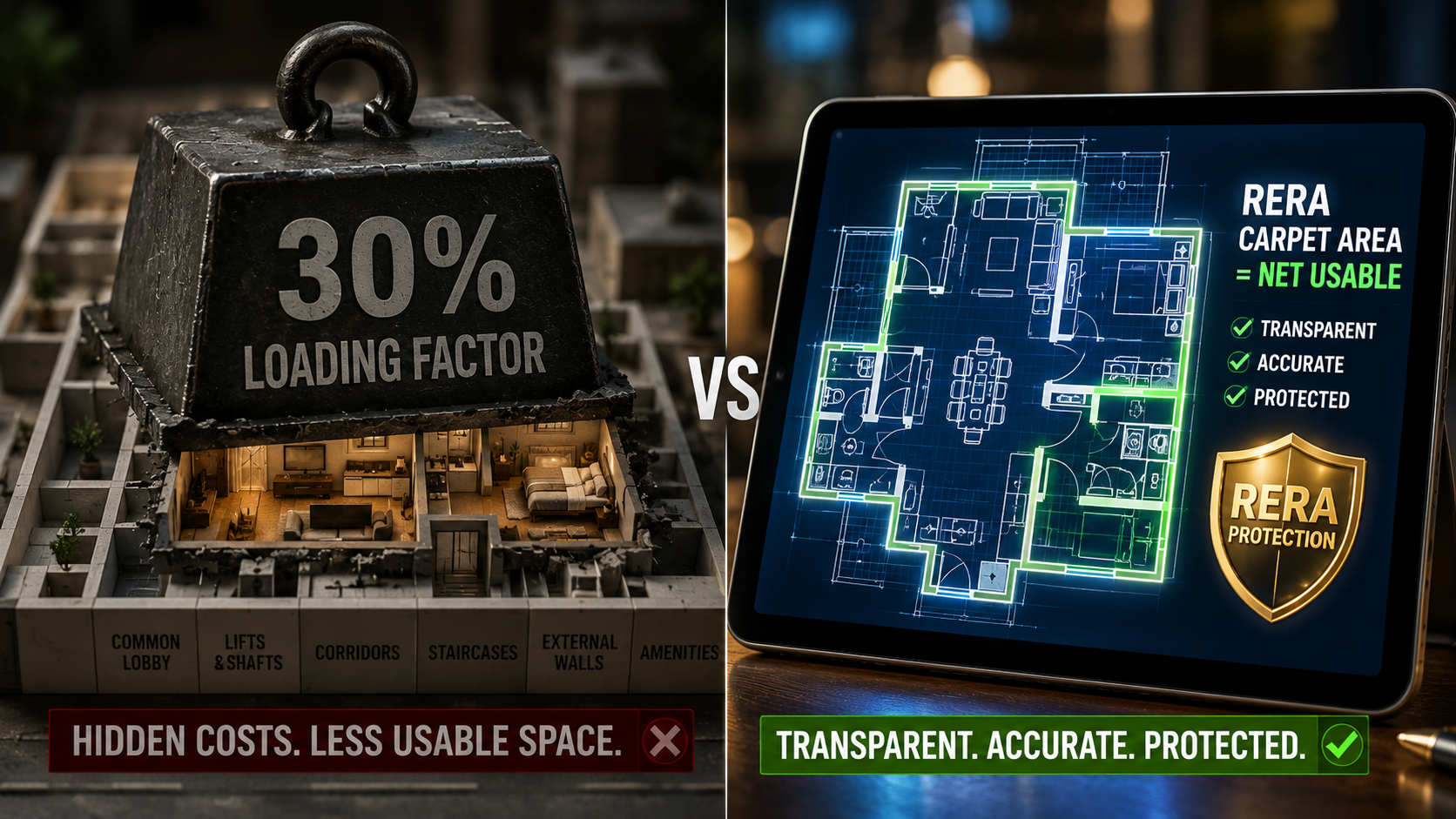
Until 2016, the builders had no standardization for measuring the area, and hence there was no standard measure for pricing. A quotation of super built up area of 1,300 square feet, charged at ₹6,500 per square foot would be equal to ₹84.5 lakh in total. However, if the project had a loading factor of 30%, then the effective area would reduce to 1,000 square feet. In this case, the cost price was ₹8,450 per usable square foot.
RERA removes this misleading calculation. The builders are now required to give quotations purely based on the RERA carpet area. This helps you compare properties in Mumbai and Bangalore based on the same measurement scale.
How does standardizing area calculations save buyers money?
Through charging prices based on the area that you effectively use, the legislation ensures that the developers can no longer extort extra money from the buyers in terms of additional square feet which is not there. No more paying for the community pool presented to you as your exclusive living space. In addition, the same will reflect in reduced property taxes since the municipal authorities have started taking into account the RERA carpet area.
What legal and practical steps should buyers take?
You have the ability to determine the authenticity of the purchase. Trust without verification will land you in a financial mess.
How can you accurately verify your apartment’s carpet area?
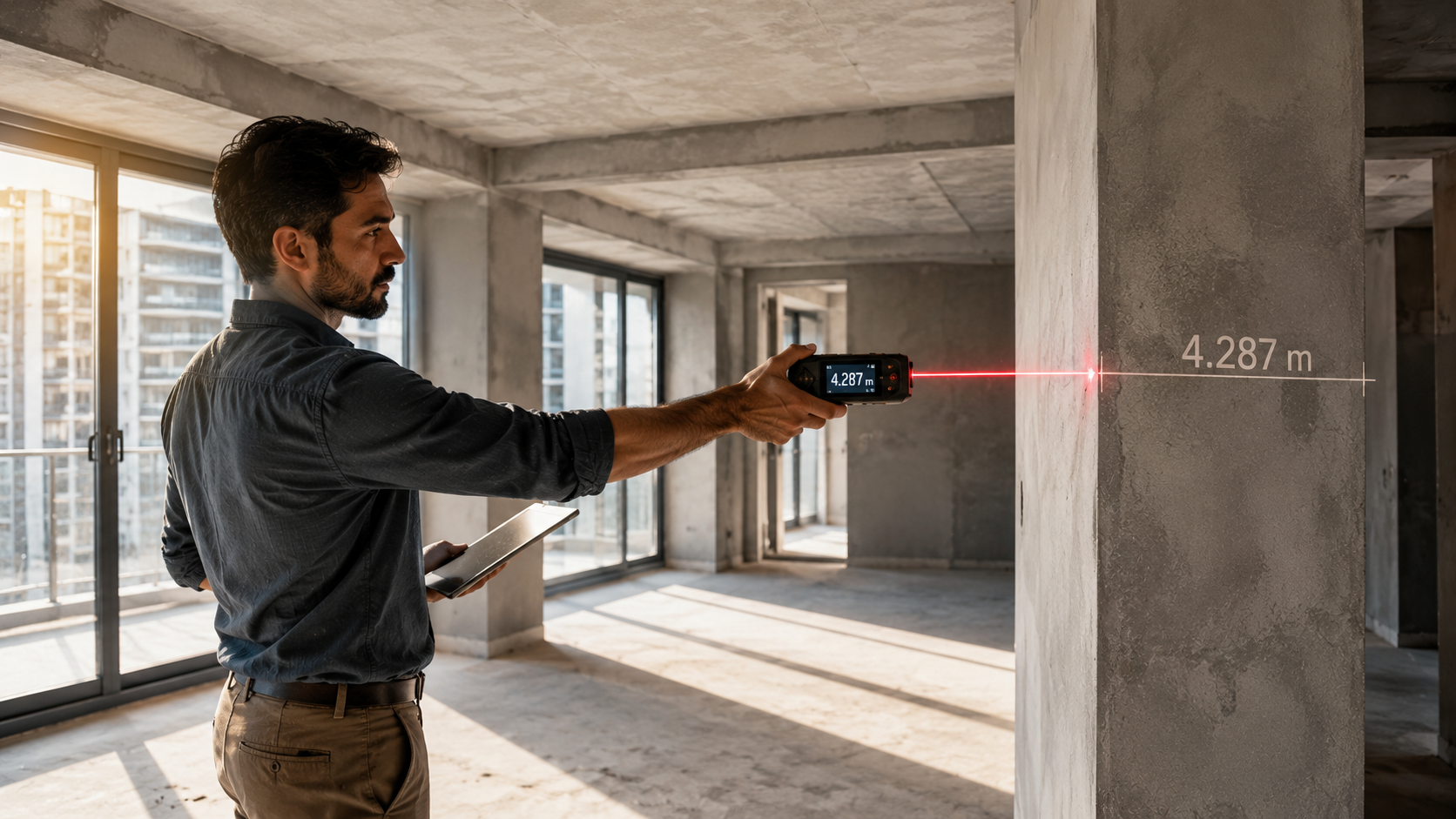
Remember that you should always request the correct layout plan prior to executing the Agreement for Sale. You need to get a qualified architect or engineer to physically survey the apartment before taking delivery. The physical survey will involve measuring the internal dimensions and adding the wall thicknesses to check whether the physical space is consistent with the carpet area stated in your RERA contract.
How do you check if a developer is RERA compliant?
Go to the official state RERA website (e.g. Maharashtra RERA, UP RERA, etc.). Look up the registration number of the particular project provided by the developer. You’ll get to see the architectural plans and carpet area figures declared by the developer to the concerned state authority. If the figures mentioned in the broker’s brochure don’t tally with that of the official state website, run for the hills!
What should you do if the delivered apartment is smaller than promised?
The law which protects the buyers’ rights is Section 14 of the RERA Act, which acts as the backbone of buyer protection. According to this, the builder needs to construct the structure as per the approved drawings. In terms of RERA, the allowed limit for engineering tolerances is 3%. If the delivery area reduces up to 3%, then the builder has to return the proportionate cost along with the interest earned annually on it within a period of 45 days from the date of delivery. However, if there is any increase, the builder can charge the cost of extra area up to 3%.

How can buyers navigate the market with expert confidence?
Knowledge of the law comes first, but using it effectively takes strategy and the proper professional assistance.
What role does your real estate agent play in compliance?
Your real estate agent should be the first defense that you have. See to it that your agent is registered with the state RERA body. If he complies with the law, then he is supposed to give you correct carpet area measurements and will be responsible for any misrepresentation of property measurements. Your broker should calculate the efficiency ratio of the project before visiting the site.
How can buyers seek legal recourse under RERA?
Even if the developer does not refund any money due to inadequate square feet, you should not give up. The other option is to file a formal complaint using the RERA portal available in your state. The recent precedents of tribunal always make it clear that statutory provisions for net usable floor area cannot be diluted by any excuse of the developer about plaster thickness and other tolerance clauses. By filing a complaint like Form A in MahaRERA, you start an adjudicatory process.
Protecting your property rights moving forward
Through the Real Estate (Regulation and Development) Act, buying a property is no longer gambling but has become an assured transaction that benefits from legal protection. By having knowledge about the mathematically determined parameters of the RERA carpet area, analyzing loading factors, and demanding adherence to the 3 percent tolerance limit set by the act, you shield your money from any unfair business practices of the market. Approach the purchase of your property with the same level of scrutiny that you would approach a corporate investment.
Frequently Asked Questions (FAQ)
What exactly is included in the RERA carpet area calculation?
The RERA carpet area includes the net usable floor space inside the apartment plus the area covered by the internal partition walls. It excludes external walls, service shafts, open terraces, and exclusive balconies.
Can a builder charge me extra if the final apartment is slightly larger?
Yes, but the charge is strictly capped. If the final RERA carpet area increases, the developer can charge for the additional space, but this increase cannot exceed 3% of the originally promised area.
How quickly must a developer refund money if the apartment is smaller than promised?
If the delivered carpet area is smaller than the sanctioned plan (up to the 3% tolerance limit), the developer is legally required to refund the excess amount collected, along with annual interest, within 45 days of handing over possession.
Why is the RERA carpet area different from the super built-up area?
The RERA carpet area only measures your private, internal living space. The super built-up area includes the carpet area plus a proportionate share of the building’s common amenities, like lift lobbies, staircases, and clubhouses.
How do I report a builder who lies about the carpet area?
You can file a formal complaint against the developer directly on your state’s official RERA website (e.g., MahaRERA or UP RERA). You will need to submit evidence of the discrepancy, such as the registered Agreement for Sale and a certified physical measurement report.



Join The Discussion