Court Shifts Focus from Builders to Approving Authorities
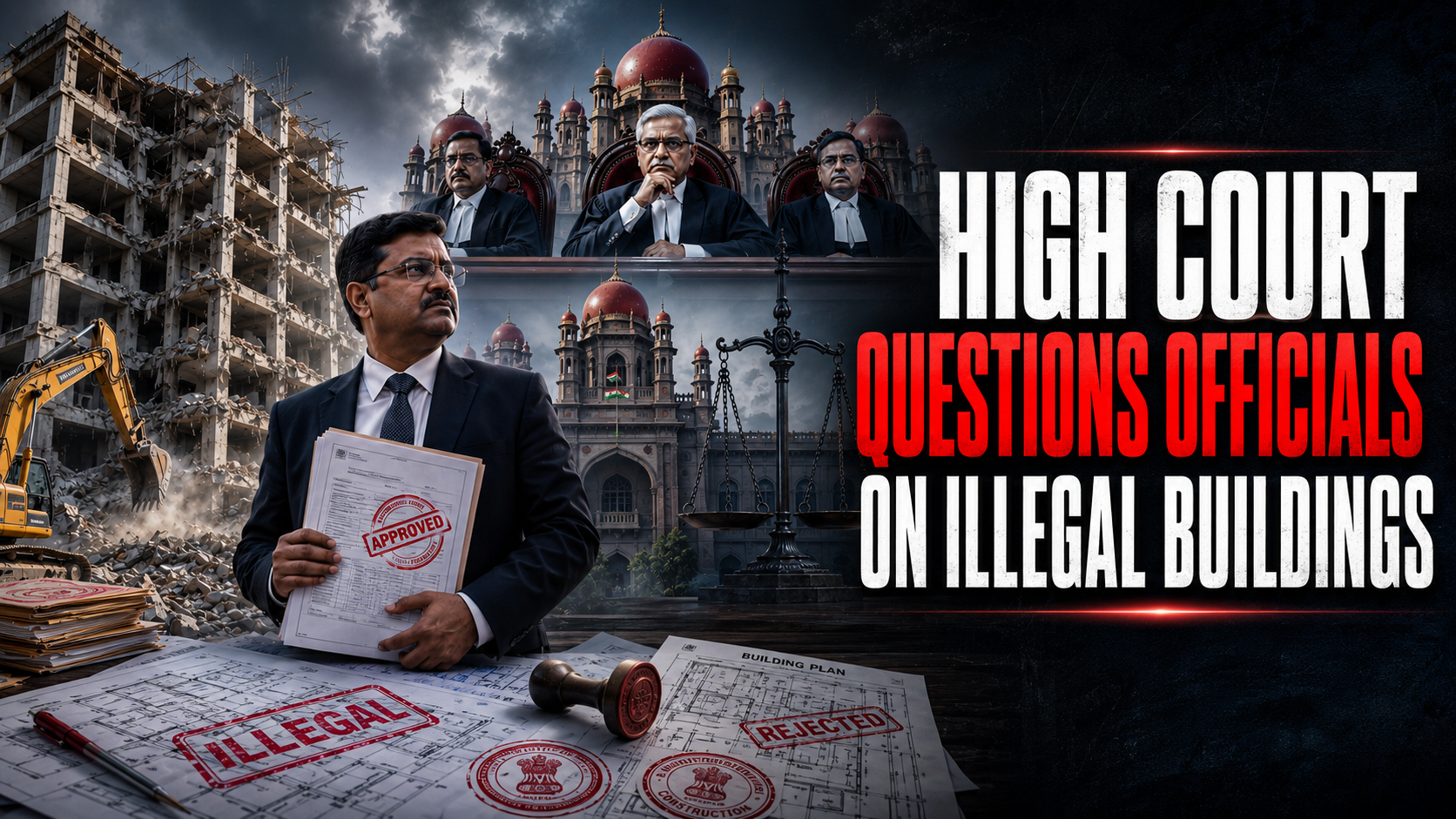
The High Court made it clear that the issue isn’t just about the illegal buildings themselves. They want to know about the officials who OK’d the building plans, gave permissions, and connected utilities to structures that eventually got demolished.
Usually, enforcement goes after developers, owners, and residents. Yet, the court is hinting that the officials involved in approving these buildings should be held accountable too. Their decisions might’ve helped these disputes arise in the first place
Patelguda Demolitions Under Judicial Scrutiny
his case is about buildings torn down in Patelguda village, where folks hurt by these actions dispute what the authorities did. During court sessions, survey results showed that some of the demolished structures were on private patta land. These findings made the issue more complicated, questioning if all the impacted properties were correctly categorized before getting demolished. So, there’s doubt now about the accuracy of their classifications prior to the teardowns.
Why the Court’s Questions Matter
The High Court’s remarks show a big gap in India’s city management rules. Illegal buildings usually get built because of approvals and inspections at different stages by several government groups. The court wondered if any officials had ever been disciplined for their part in this, though.
- Approved disputed building plans.
- Granted civic and infrastructure permissions.
- Allowed utility connections to the structures.
- Failed to detect or prevent violations during construction.
By seeking answers on these issues, the court has brought administrative accountability into the spotlight.
A Long-Standing Challenge in Urban Development
Urban planning experts say unauthorized construction isn’t just about individual actions. Municipal corporations, planning authorities, revenue departments, and utility agencies all play a role in how projects go forward.
When buildings get services and run for years before being called illegal, it raises questions about institutional oversight and regulatory mistakes.
The court’s view fits into a bigger pattern in the judiciary of looking at systemic errors rather than focusing only on property owners or end-users.
Impact on Homebuyers and Investors
The big deal about this case is how it affects real homeowners. People buying properties use government approvals and official plans to make their decisions.
When homes get demolished after having all the right papers, it leaves innocent buyers with huge financial hits. So, the High Court’s comments could mean more safeguarding for people who invest honestly based on official clearance.
Potential Changes in the Approval Process
Experts believe stricter scrutiny of approving authorities could lead to several reforms:
- Greater transparency in building approval systems.
- Stronger verification mechanisms before permissions are granted.
- Improved coordination among planning and enforcement agencies.
- Increased accountability for officials responsible for regulatory violations.
- Better safeguards for homebuyers and investors.
Such measures could help reduce future disputes and improve trust in urban development regulations.
What Happens Next?
The Telangana High Court is expected to seek detailed responses from government departments regarding:
- Which officials approved the disputed constructions.
- Whether disciplinary action was initiated against responsible officers.
- How civic and utility clearances were granted.
- What safeguards exist to prevent similar cases in the future.
The court’s findings could shape future policy and enforcement practices across Telangana.









Join The Discussion